


ICT Projects

ICT Engineering is a division of DiTec Engineers, an engineering and consulting firm specialized in the area of telecommunications and in drafting ICT Projects (Common Telecommunications Infrastructures).
At ICT Engineering, we are a team of Telecommunication Engineers with extensive experience in the design of ICT projects for all types of buildings. We also maintain a valid partnership agreement for document verification with the Official College of Telecommunication Engineers (COIT).
Constantly evolving, ICT Engineering adapts its services to the stringent demands of the new telecommunications regulations for I.C.T.
The services that must be supported by these infrastructures are:
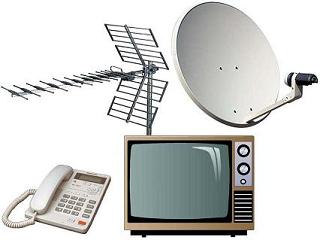
- Sound broadcasting and terrestrial television: both analogue and digital, including all the necessary resources for its reception, adaptation, and distribution.
- Publicly available telephony services: Dimensioning, access, and distribution network of the signals.
- Fixed wireless access service and broadband communications: Access planning and distribution conduit provisioning.
- Sound broadcasting and satellite television: In this case, provision for signal reception, distribution, and mixing with previous signals will be considered.
Regarding Common Infrastructures inside buildings for accessing Telecommunication services: Royal Decree 346/2011 of March 11 approved the new Regulation for Common Telecommunications Infrastructures, which applies to all projects submitted on or after October 1, 2011.
- Telematic information exchange between designers and network operators.
- MANDATORY project checking by accredited Verification Entities.
- ICT User Manual provision.
- Conservation and maintenance requirements for ICT systems.
- Reference framework for building rehabilitation.
- Technical inspection of existing telecommunication infrastructures.
- Incorporation of ultra-fast access technologies into the ICT.
- Networks based on twisted-pair technologies inside new housing developments (Cat. 6).
- Increased number of connection outlets within households.
- Television reception systems adapted to TDT (DTT) and limitations for broadband amplifier systems.
- Flexible positioning of the network termination registry inside homes.
- Introduction of the Digital Home concept and household classifications.
The European Commission's Communication, "A Digital Agenda for Europe", outlines the need for ultra-fast internet access to stimulate vigorous economic growth, job creation, and prosperity. The Agenda establishes the following goals:
- Basic broadband coverage for everyone by 2013.
- Speeds above 30Mbps by 2020.
- 50% or more of European households subscribing to internet connections above 100Mbps.
- Ensuring universal broadband coverage with ever-increasing speeds.
- Fostering the deployment of NGA (Next Generation Access) networks.
- Monitoring and safeguarding the open and neutral nature of the internet.
- Updating internal building cabling.